Check out this blog article I wrote for Rain Retail Software:

“Retail Marketing Strategies and Ideas to Grow Your Business”
Marketing Professional
Check out this blog article I wrote for Rain Retail Software:
“Retail Marketing Strategies and Ideas to Grow Your Business”

From 2006-2011, I owned and operated Muse Recording Studio in Provo, UT. I sold the business to focus on getting my MBA but while I ran the business, I learned a few valuable lessons about marketing a recording studio that I will share with you. Even if you are not marketing a recording studio, the concepts can apply to other industries.
I’m going to operate with the assumption that you have built a studio (or at least have enough equipment to start recording people in some way), that you’ve put together some kind of website for your studio/services but you’re wondering “now what?” How do you get a word of mouth reputation going. Here are some ideas to consider.
1. Build your network (aka “go where the music is”)
There is a story about a famous bank robber name William Sutton. After he was caught, a reporter asked him “why do you rob banks?” His reply: “Cause that’s where the money is!” The same sentiment applies to marketing studios. If you want to record music, you need to go to where the music is being made. This means going out to local shows and meeting bands. An even better scenario is if you can get a job doing sound at a venue so that you can meet the bands AND get a chance to show them your audio skills. After the band is done playing, go up and introduce yourself and tell them about your new studio. Give them a business card and try and get their information as well. Be genuine, sincere, and professional. Start compiling this info in someway; perhaps a spreadsheet with notes. Look for other networking opportunities like facebook groups or industry events. Think about the type of people you need to meet and where they would gather.
2. Do stuff for free (and the money will follow).
Some people would disagree with me on this. I’ll get to that in a minute but hear me out. The reality of not having a reputation means you’ll have to do some things for free. Call it portfolio building if you’d like. One angle that has worked for me is approaching bands with the premise that you are recording a compilation and you’d like to record a song for them for free to be on your compilation. If you have budget to get some copies pressed, that’s great and I would recommend it but the nice thing about this digital age is that you could put the album on soundcloud or bandcamp and not have to worry about printing costs. This is a nice way to quickly build a rooster of bands you’ve recorded and have the bands help promote the compilation, which promotes you (make sure to make it obvious that all the songs were recorded by you and/or in your studio). If you are real slick about it, as you record bands for this compilation, you can say to them “As long as you guys are set up, you can pay to record a few more songs, if you are interested.” This can quickly turn a free gig to a paid gig but don’t be disappointed if it doesn’t always happen.
Related to this concept and networking is offering to help assist at bigger studios from time to time. This is good for several reasons: it introduces you to new bands, exposes you to new equipment/approaches and can help build goodwill all around. However, many studios may be reluctant to let someone else get involved because of several reasons: another person in the way, you could potentially steal away their customers, they don’t know if they can trust you, etc. Try and be cool about it and not obnoxious.
Now, having said all this, take it with a grain of salt because there are a few things to keep in mind. Think about your perceived value. If you give your services away, you might be cheapening what people think you can provide or are capable of. You may not be able to get the recipient of your free service to pay you in the future, for that reason. However, it might be something you want to do starting out and may lead to more referrals.
3. Think Outside the Studio
There may be other opportunities out there then just in your studio. One idea is live recording concerts at a venue. Usually the bands stand to make a little bit of cash when they play a show. It’s typically not enough to be significant to them individually so why not get them to spend it on a recording? If you are not already doing the house sound, you could work out a deal with the venue owner to be the official live recording tech. Other opportunities are to record the band on location (at their practice space). Think about other types of events as well: orchestras, choirs, concert bands, poetry, open mics, speeches, radio spots, film shoots. Get your head out of thinking that it has to just be a band in a studio.
4. Start a Podcast/Youtube Series
This is a chance to get people into your studio, record them, built a relationship and promote. If you have a decent personality, you can turn it into a radio show, have a conversation with the band, have them play some acoustics songs, etc. KCRW’s Morning Becomes Eclectic is a great format to borrow from. Like the compilation idea, this a win-win situation: the bands gets to stroke their ego a bit, play some tunes, and/or plug an event; you get to promote your services. If you have access to a decent video camera or two, you could turn it into a Youtube in-studio performance series.
5. Let’s Make a Deal
I used to offer an ongoing “Buy 5 hours, get the 6th hour free” deal with clients. They loved it and the nice thing was, it would incentivize them to record just a little bit more than they probably would have, just so that they could get that free hour. Consider what kind of bundles you could offer: “Record the album in the studio and I’ll also record a live concert for free”, a flat (fixed) rate for the album, include recording acoustic demos of the songs before they become full band recordings, etc.
Check out this innovative packaging idea from Nutella.
In The Lean Startup, Eric Ries makes the case the businesses, small and large, need to be run with a more entrepreneur spirit in order to be innovative and stay competitive.
He outlines 5 main principles:
1. Entrepreneurs are Everywhere
2. Entrepreneurship is Management
3. Validated Learning
4. Innovative Accounting
5. Build Measure Learn.
One of the things that resonated with me is the concept of building a “Minimum Viable Product.” Many businesses spend years and millions of dollars in research and development only to waste money creating the wrong product. The Lean Start-up approach is to create a product with as few features as possible, start having people use it, and use the data and feedback to iterate on the future direction of your product. It could mean completely changing how your product is used and marketed or adding/deleting features core features to make the product better. It’s the constant learning that allows your business to adapt and become successful.
Check out the theleanstartup.com for additional resources.
OK Go is back with another over the top, super interesting conceptual music video; this time in slow motion. This one is sponsored by Morton Salt, which is an interesting move. In the past, this would have been viewed as selling out but with the nature of today’s music industry, audiences are more understanding of artists finding additional sources of revenue. Here’s the new video:
Take a stroll down memory lane and watch some of OK Go’s previous videos:
The original viral hit that started it all:
Check out this interesting concept from a Seattle artist. He uses a water resistant finish and stencils to create art and messages on sidewalks that only appear when it rains. There are some interesting implications for guerrilla marketers to do something non-traditional.
More at http://rain.works/
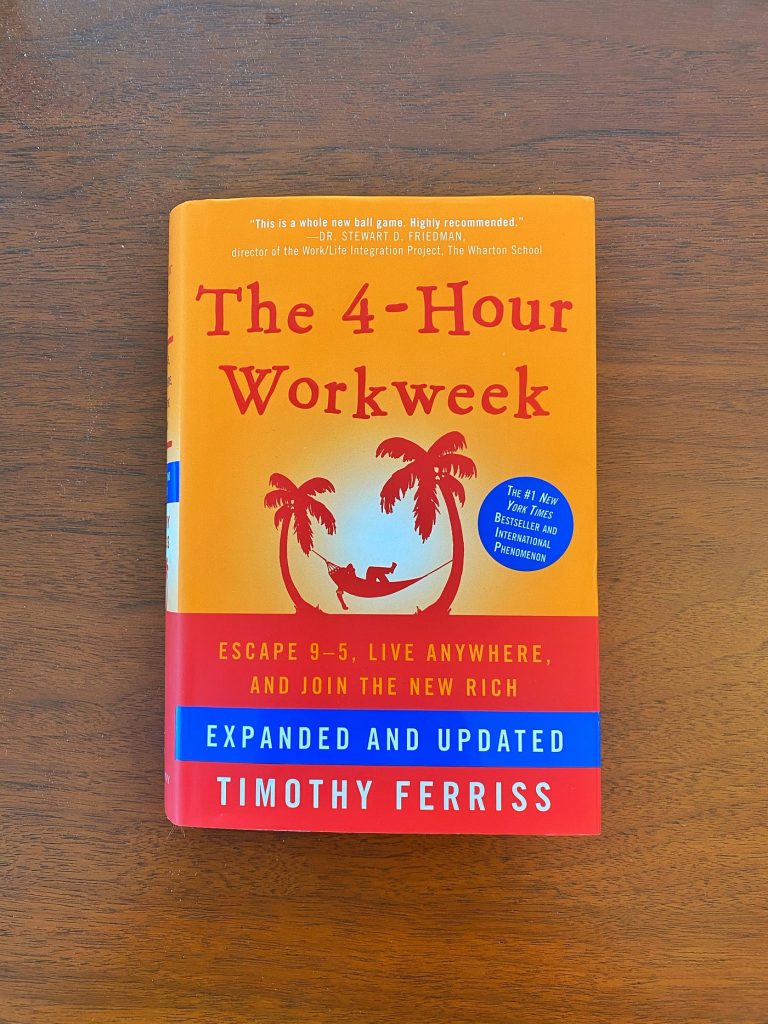
This is a book for people trying to get the most out of life by working smarter, not harder. It’s a book full of what is now known as “Life Hacks.” Tim Ferriss starts with a story about how he was running his vitamin supplement website by himself. After a few years, he found himself overworked, exhausted and without the time to enjoy any of the modest success he was having. He decided he needed to clear his head and go on a month long trip to Europe. He outsourced his responsibilities and created processes for his website to remain running in his absence. After his trip was over, he found things actually ran better without him and he made more money without much effort. So, he decided to keep it going.
Tim argues that the best thing you can do with your career and life is to create a passive flow of income so you can focus your time on the things you are passionate about. For him, this meant traveling and picking up new hobbies and skills like learning foreign languages or ball room dancing. By careful planning, he was able to hunt down deals on travel and hotel enabling him to live in exotic locations while only working 4 hours a week from his laptop. He gives plenty of practical tips for accomplishing this, such as hiring a virtual assistant of out India to inexpensively manage your work schedule or ideas for creating new online businesses.
If you work for someone else, Tim outlines ways you can transition to working from home by convincing your boss that your performance is more important that your presence in an office. Once out of the office and away from distractions from co-workers and pointless meetings, you can be hyper-productive and accomplish your workload in a fraction of the time and free your time up so you can have your desired lifestyle.
I don’t think all of Tim’s ideas will work for everyone but he definitely gives some interesting things to think about.
Here’s a cool idea the Red Cross came up with to gather donations at airports from the foreign currency travelers no longer need.
I remember seeing this product pitched last year on Shark Tank:
Basically, it’s a stool designed to help you poop in a more natural position. About three years ago, they started marketing with this informational based video, which has accumulated about 3 million views.
While the first video isn’t terrible, it isn’t exactly the type of viral content one would typically share with their friends. Recently, a new humorous video in the vein of Old Spice ads was posted to Youtube. It strattles a very fine line between being over the top gross and silly but has gotten a ton of attention through social and news channels. In just it’s first week alone, it’s accumulated 2.2 million views, almost matching what the original video has taken 3 years to do. Take a look:
It’s an curious progression they’ve made on their marketing. It will be interesting to see if it pays off or if they gross out their audience. What do you think?
Gillette got the composer, Son Lux to write and perform a piece of music with a piano rigged up to be played by Gillette razors:
When I saw it, I was immediately reminded of this Delta faucet ad that features a performance by Wilco’s drummer, Glenn Kotche:
In both cases, the ad features that product but in a way that has little to do with the everyday actual use of the product. It seems the me that the purpose of these ads is simply to create something visually and sonically interesting, in hopes for the videos to go viral and have there products featured in the middle of it all. It seems that with 2.5 million views, Gillette has succeeded in this strategy but with only a little over 100K views, Delta has failed.